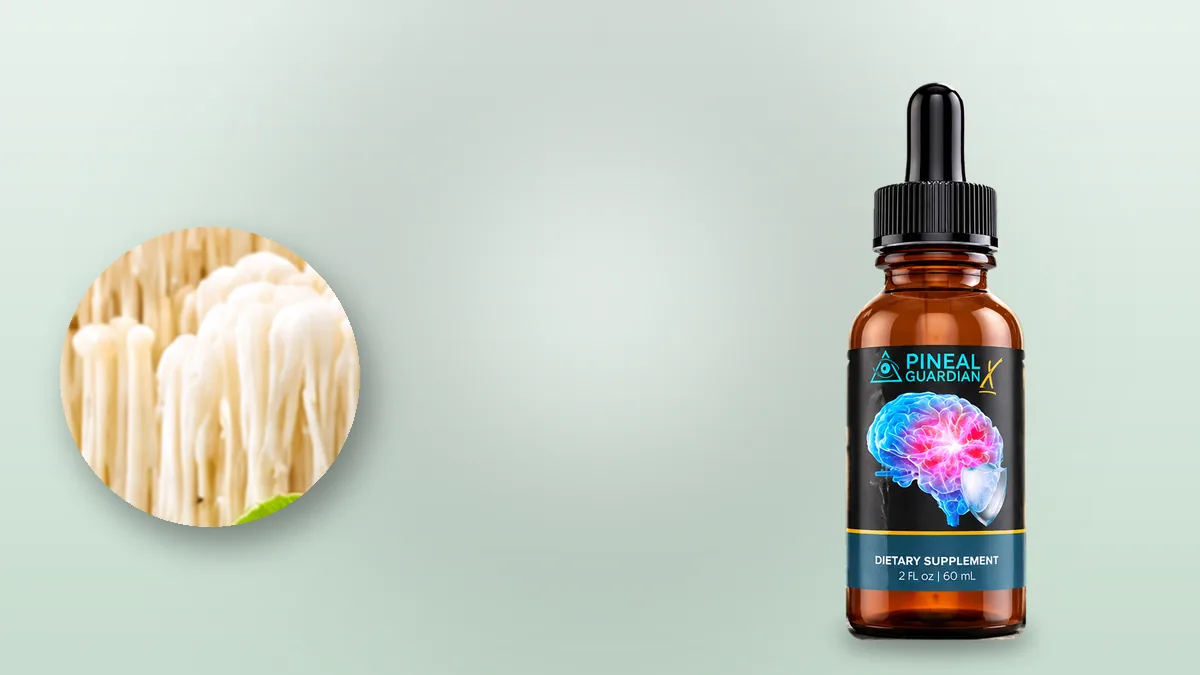
Yamabushitake — better known in English as lion's mane (Hericium erinaceus) — is an edible mushroom with long, white, cascading spines. It has been eaten in Japan and China for centuries and is now one of the most popular ingredients in brain-support supplements. It is also the first ingredient the seller lists in Pineal Guardian X.
What researchers have studied
Laboratory and animal studies have explored compounds in lion's mane called hericenones and erinacines, which have been investigated for their effects on nerve growth factor. Lab findings are a starting point — they do not show what happens when a person takes the mushroom.
Human evidence is smaller. A frequently cited Japanese trial randomized 30 adults aged 50 to 80 with mild cognitive impairment to lion's mane tablets or a placebo for 16 weeks. The lion's mane group scored higher on a cognitive function scale during the trial, and the scores fell again after they stopped. It is encouraging but preliminary: the trial was small, used a much larger dose of dried mushroom powder than many blends contain, and studied a specific group. (Abstract on PubMed.)
Realistic expectations
- Lion's mane is a food mushroom and is generally well tolerated, but people with mushroom allergies should avoid it.
- Research on one ingredient does not prove that a multi-ingredient product works, because amounts and combinations differ.
- Any benefit, if present, is likely to be gradual — think weeks, not days.